
Fall is here, and so is the steady Oregon rain. It’s also the time of year when small rot problems at the bottom of a backyard shed start to grow. This West Portland customer had a shed where dirt had built up against the back walls over time, and moisture did the rest: soft, broken siding along the base outside and a rotted section of floor inside. Brian came out to fix it.
What We Found
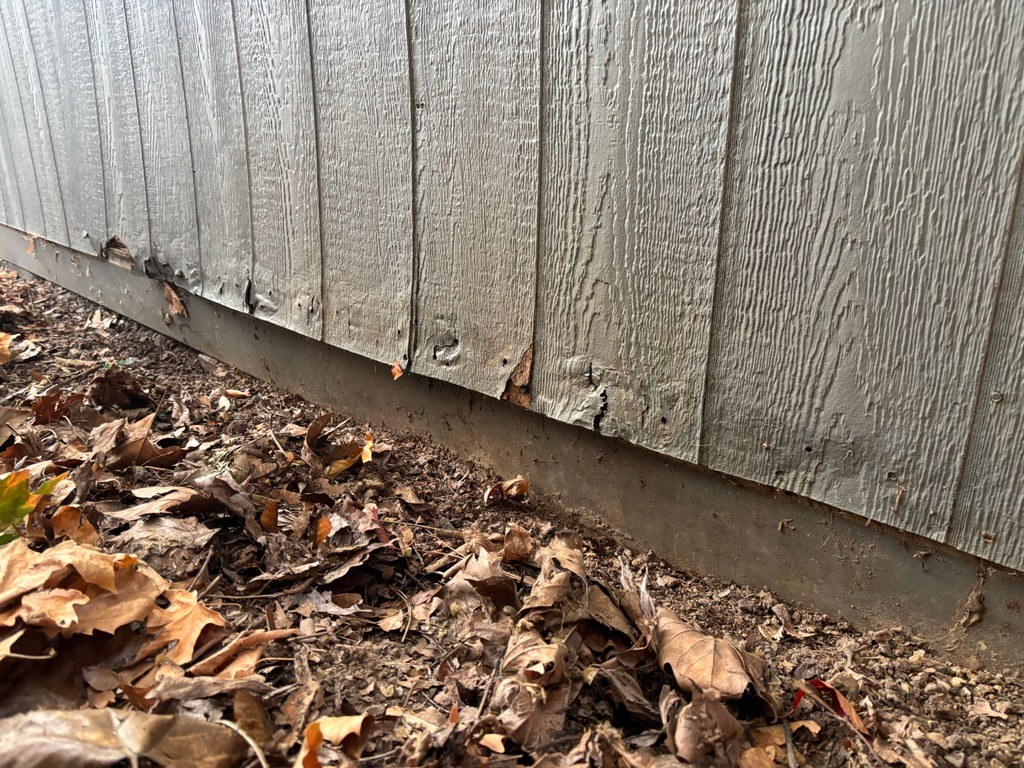
Outside, dirt and leaves sat right up against the bottom of the siding on the back two sides of the shed. The bottom edge of the siding was soft, chipped and breaking away.
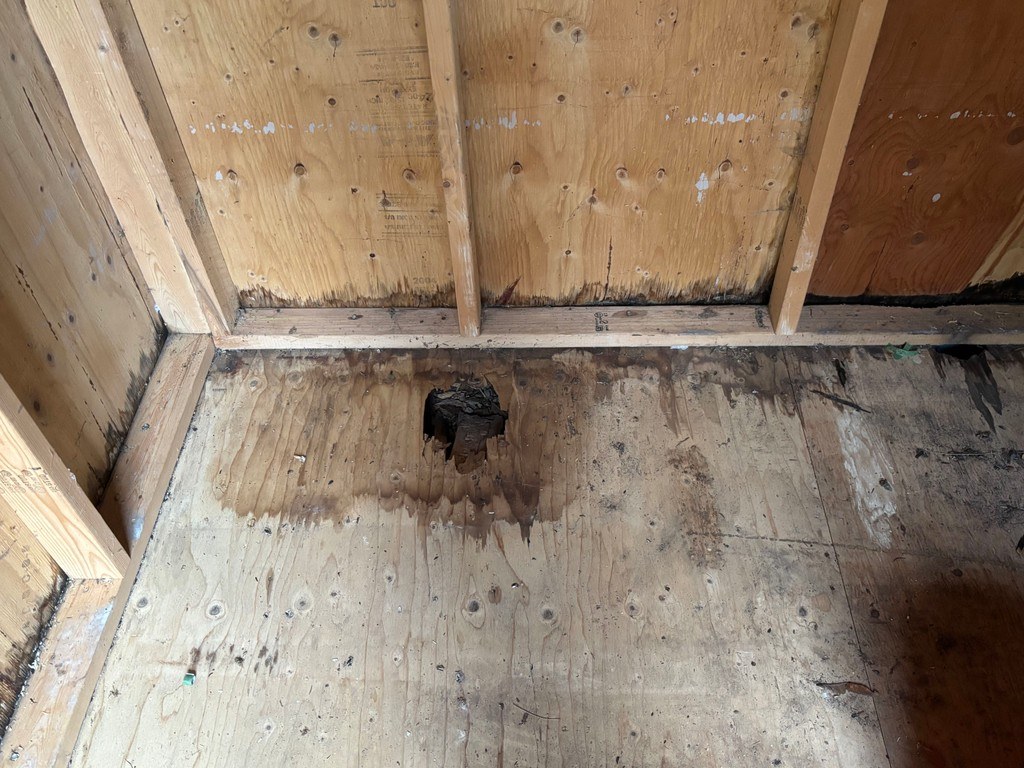
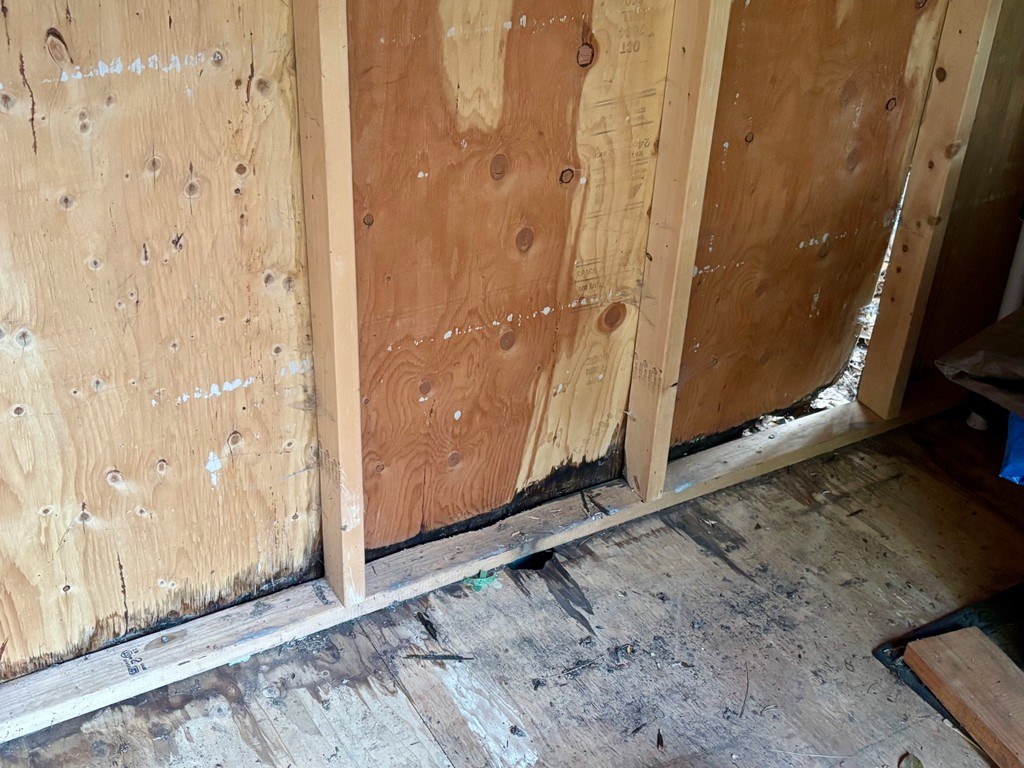
Inside, the damage was easy to see. The subfloor along the back wall was dark and stained, with a spot rotted all the way through. The bottom edges of the wall panels were darkened too.
Why Soil Against Siding Causes Rot
Siding is made to shed rain, not to sit in wet ground. When dirt, mulch or leaves pile up against a shed’s walls:
- Water wicks up into the wood. The bottom edge of the siding stays wet and never fully dries out.
- Our rainy season makes it worse. From fall through spring, Oregon’s cool, wet weather keeps that wood damp for months at a time.
- Rot spreads inward. What starts in the siding can move into the framing and the floor inside.
Keeping soil and debris pulled back from the walls is one of the simplest ways to make a shed last.
How Brian Fixed It
Here’s what Brian did on this job:
- Dug back the dirt that had piled against the back two sides of the shed, so the walls are no longer sitting in soil
- Cut away the rotted siding along the bottom of the two damaged sides, about 5.5 inches up
- Installed flashing and new cement board trim along the base. Cement board holds up to moisture much better than wood, which makes it a good fit close to the ground
- Painted the new trim
- Inside, cut out the rotted section of subfloor and installed new subfloor, so the floor is solid underfoot again
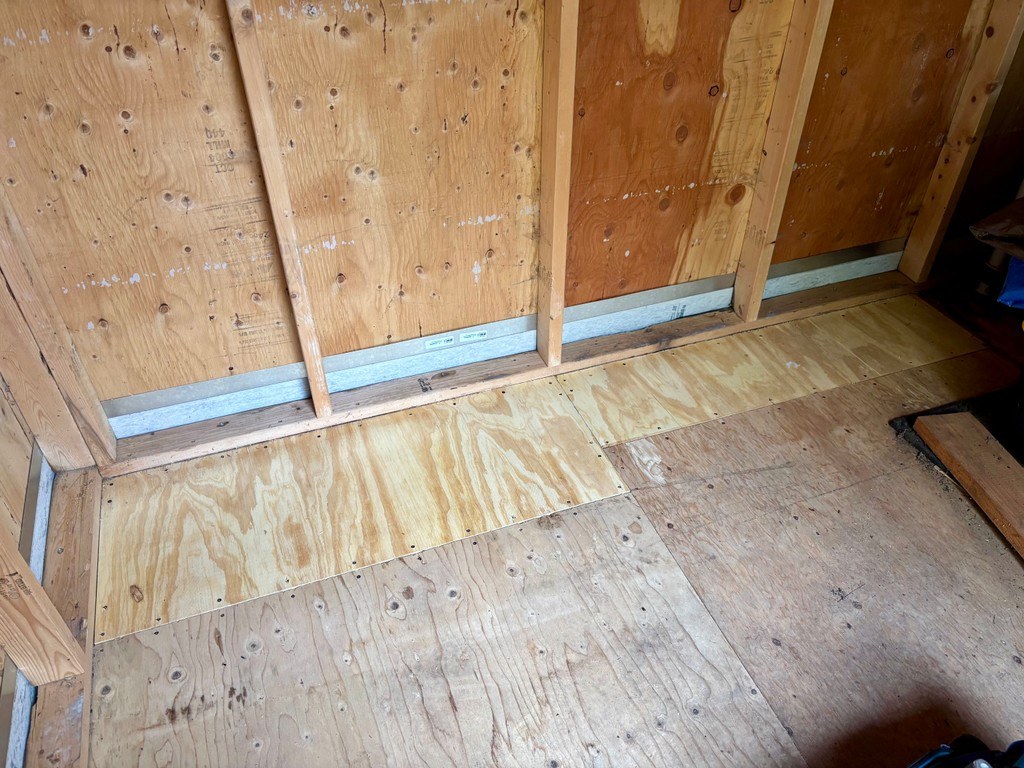
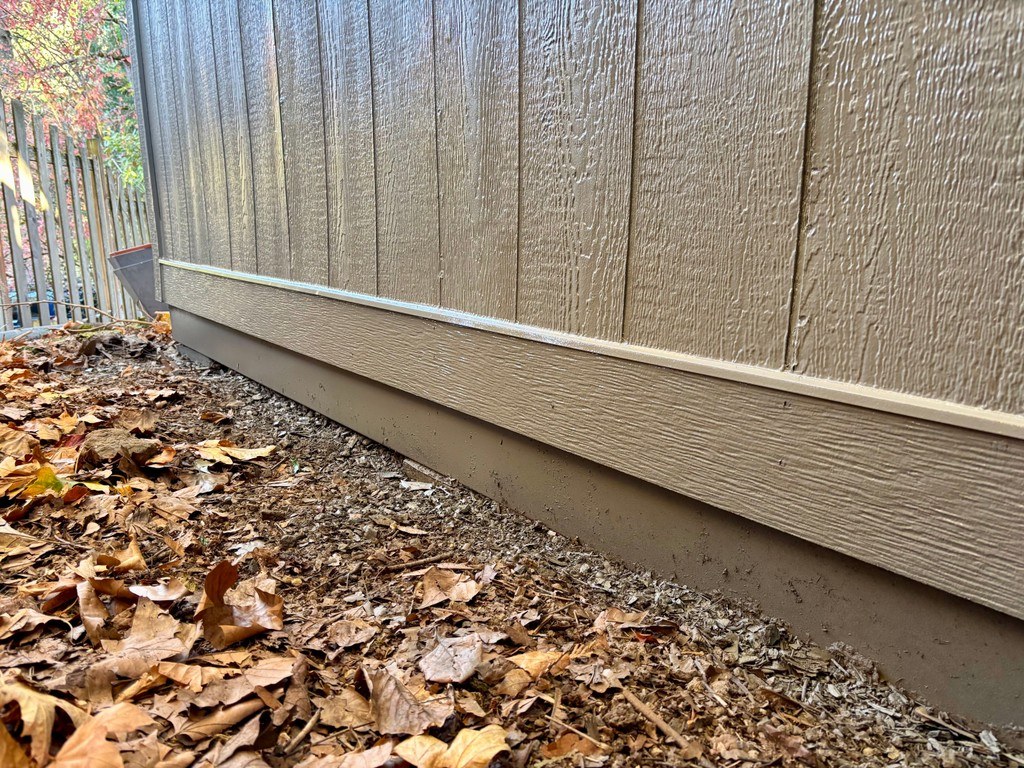
The flashing helps send water out and away from the wall, and the trim gives the bottom of the shed a clean, durable edge that’s ready for the wet months ahead.
Signs Your Shed Has Rot
It’s worth a quick walk around your shed this fall. Look for:
- Soft, crumbly or chipped siding near the ground
- Dark stains at the bottom of the inside walls or on the floor
- A floor that feels spongy or gives a little when you step on it
- Dirt, mulch or leaves piled against the walls
- A musty smell inside
A simple test: press a screwdriver into the wood. If it sinks in easily, there’s likely rot.
When to Call a Pro
If you catch it early, pulling the dirt back and keeping the area clear may be all you need. But once rot has reached the floor or framing, or runs along a whole wall, it’s time to have it repaired. Fixing it now, before the heaviest winter rain, keeps a small repair from turning into a bigger one.
We’re local, licensed, bonded and insured, and we show up when we say we will. Have a shed in Hillsboro, Beaverton, West Portland or nearby that’s showing these signs? Text us at (503) 567-1058 for a quote. Sending a few photos of the problem areas helps us get back to you faster.